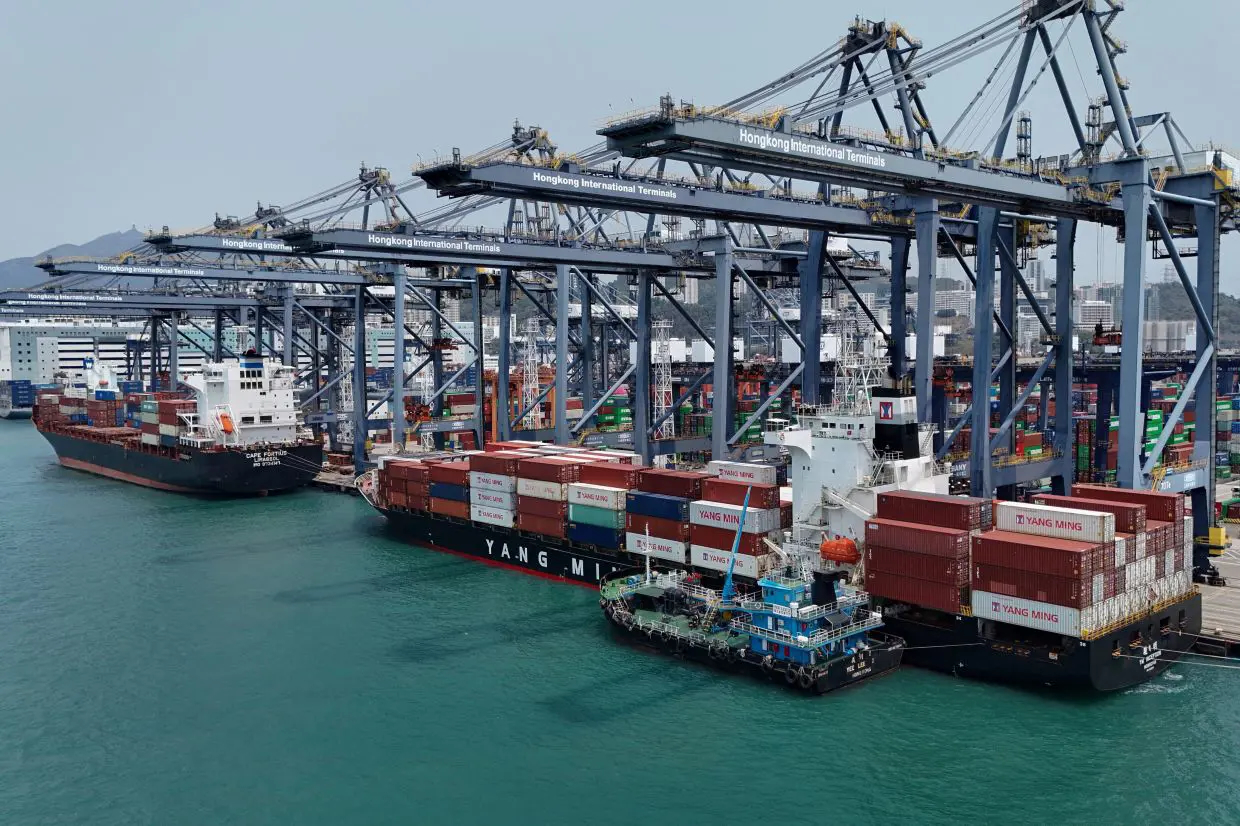
【Wealthy CityLinkers】Hong Kong’s Trade Resilience Amid US Tariff Headwinds
This has sparked market concerns about Hong Kong’s foreign trade outlook. However, a closer look at international trade data and local industrial structure reveals that Hong Kong’s fundamental position as a global supply chain hub remains solid.
Trade Hub Status and Export Structural Advantages
According to the latest report from the World Trade Organization (WTO), Hong Kong ranked as the world’s fifth-largest commodity trading economy last year, with total commodity imports and exports reaching US$1.585 trillion, accounting for 3% of the global total. This places Hong Kong just behind mainland China, the US, Germany, and the Netherlands, and ahead of the UK, Japan, and France.
Given Hong Kong’s population size, this ranking fully underscores its unique advantage as a “super connector.” More notably, the structure of Hong Kong’s exports is worth highlighting. Electronics account for over 70% of total exports. With the rapid global development of the AI and data center industries, most of these core products enjoy tariff exemptions.
Pang Ming, Director of Research of the Hong Kong Trade Development Council (HKTDC), pointed out that tariff exemptions for electronic products will remain in place, meaning the new tariffs will have a limited actual impact on Hong Kong. HKTDC Chairman Frederick Ma Si-hang also stated that the tariff adjustments would not significantly affect Hong Kong; the council had previously revised its export growth forecast for this year upward from 8-9% to over 20%.
Market Diversification and Expansion into Emerging Markets
In response to the restructuring of global trade, Hong Kong is actively reallocating market resources. Coinciding with the HKTDC’s 60th anniversary, the council has established six industry clusters, including financial and professional services, and technology and digital innovation, while flexibly reallocating resources across its 51 global offices.
The HKTDC stated it is considering integrating and reallocating resources. One option is to potentially shift some US-based resources to South America (such as Peru and Brazil), while strengthening footholds in emerging markets like Central Asia (Kazakhstan), the Middle East (Saudi Arabia), and North Africa (Egypt). It was announced that a new office will be opened in Egypt within the next 6 to 9 months to serve as a hub for the African region. This diversified layout helps businesses mitigate the risks of relying on a single market and explore new opportunities.
In summary, the impact of US tariff measures on Hong Kong’s actual exports is manageable, and Hong Kong’s core value in the global trade system remains unshaken. Mainland enterprises and local traders looking to “go global” should not be overly distracted by tariff concerns. Instead, they should focus on two key strategies: deepening supply chains for high-value-added tech products, and leveraging the HKTDC’s emerging market offices and Hong Kong’s professional services platform to restructure their overseas presence. Companies that make full use of Hong Kong’s platform will be better positioned to navigate change and move forward steadily.
CityLinkers Group, Partner, Paxson Fung
For original article, please visit: https://www.hkcd.com.hk/hkcdweb/content/2026/08/05/content_8768351.html

