China’s Exports Break Annual Record, with Strong Growth Expected to Continue in 2026
As a result, China posted a trade surplus of US$213.6 billion in the first two months of this year, significantly higher than the US$169.21 billion recorded in the same period last year and better than the market forecast of US$179.6 billion.
This shows that, driven by rising global demand for electronic and technology products, China’s export momentum has clearly strengthened. If no large-scale energy or shipping crisis emerges in the coming months, China’s full-year trade surplus could exceed last year’s record of US$1.2 trillion (HK$9.4 trillion).
Technology Products Lead the Way as Traditional Industries Rebound
Regarding the composition of exports, Tianchen Xu, Senior Economist at the Economist Intelligence Unit (EIU), said: “The increase in integrated circuits and technology exports is in line with expectations and closely aligned with the global boom in artificial intelligence investment.” Against the backdrop of a global memory chip shortage, China’s semiconductor exports soared an annual 66.5%, the fastest pace in more than a decade. During the same period, rare earth exports also posted a 23% annual increase.
Beyond high-tech products, exports of traditional manufacturing categories such as apparel, textiles, and bags—which had been weak in 2025 due to competition from Southeast Asia and South Asia—also showed an unexpectedly strong rebound at the beginning of this year.
Xu expects China’s exports to strengthen further in the coming months. Following the U.S. Supreme Court’s decision to temporarily halt the Trump administration’s sweeping tariff measures, Chinese factories may seize the opportunity to accelerate shipments to the United States. Meanwhile, Chinese companies are also gradually regaining market share in low value-added products.
Multiple Demands Forge New Growth Poles, as Policy Optimizes Strategic Industrial Layout
Dan Wang, Director for China at Eurasia Group, noted that the global rise in defense spending is likely to boost external demand for China’s industrial products. At the same time, China’s “New Three”—electric vehicles, lithium-ion batteries, and solar cells—are also showing enormous export potential.
The release of these trade figures comes shortly after Beijing introduced a five-year blueprint. This blueprint places accelerated technological breakthroughs and the comprehensive application of AI at its core. These strong results undoubtedly reinforce policymakers’ judgment that expanding investment in strategic sectors will help consolidate China’s dominant position in global supply chains.
Sustained Momentum and Potential Risks
Although the data at the start of the year is impressive, it remains to be seen whether the volatile situation in the Middle East—and any blockade of the Strait of Hormuz, a key passage for one-fifth of the world’s oil and for Chinese goods exported to Europe—could deal a blow to manufacturing. China’s active imports of key bulk commodities for manufacturing in the first two months of the year may suggest that officials are already preparing for potential risks.
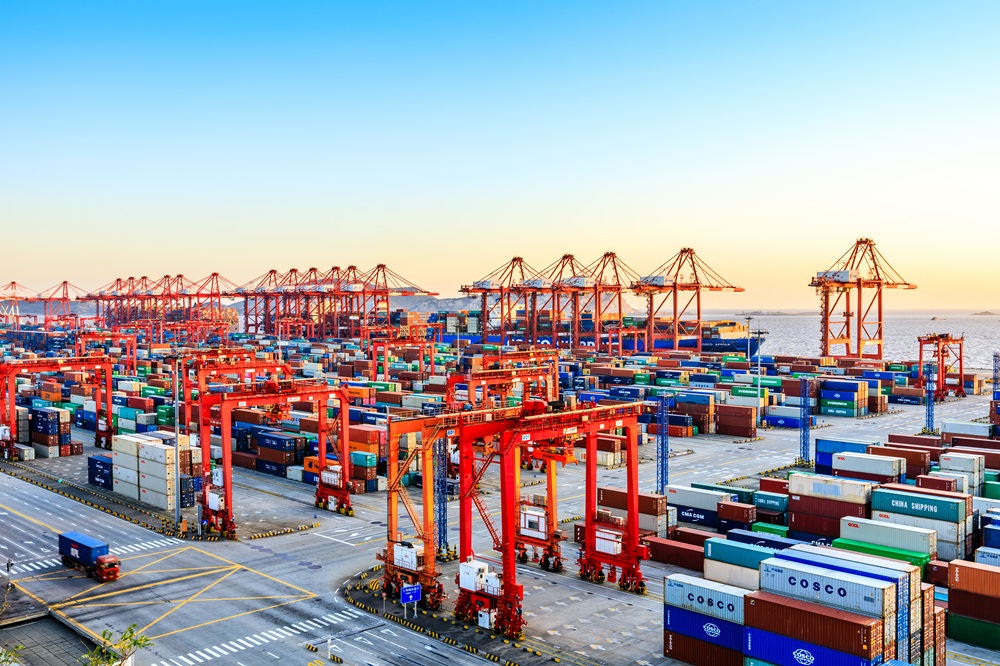
Although large-scale U.S. tariffs on Chinese goods last year led to a decline in China’s exports to the United States, increased exports to Europe, Latin America, and other regions effectively offset the impact. Overall, in 2025, China’s exports rose 6.1%, and its trade surplus reached a record high of nearly US$1.2 trillion.
China’s strong start in foreign trade in 2026 has therefore extended last year’s record-setting momentum. Despite ongoing China-U.S. trade frictions and lingering geopolitical risks, the current data highlights the deep resilience and potential of the Chinese economy. If no major external shocks materialize in the near term, exports are likely to remain a key engine of economic growth throughout the year.